

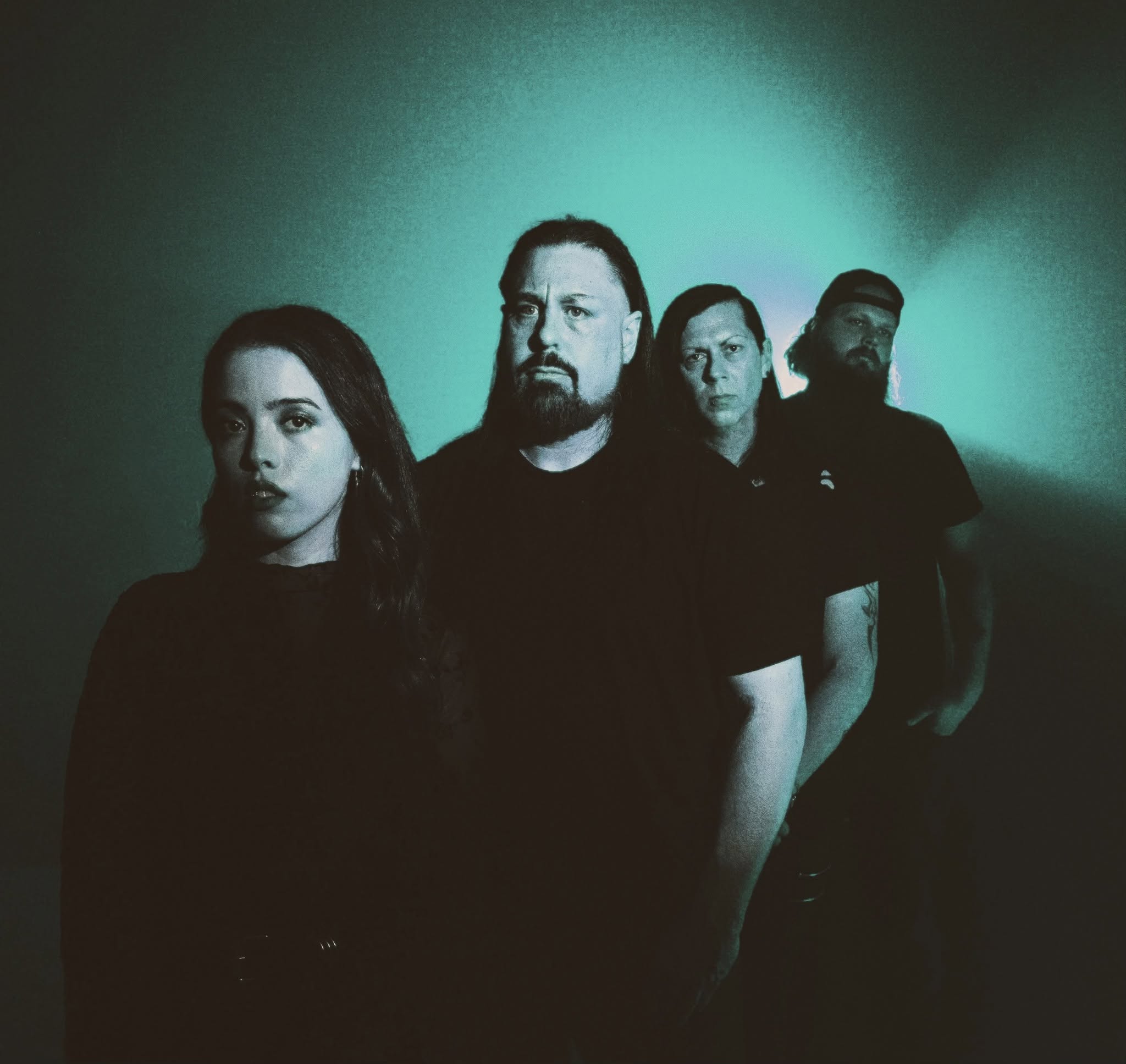
The Binding Divide began with an old vocalist ad that nobody remembered to delete.
Before the new name, Orlando’s Ryan Danley, John “Pentagon” Panaccione, and Chris Caruso performed together as The Dev, a hard-rock band formed in 2019 that reached stages at Welcome to Rockville and Louder Than Life. When the group parted ways with its original vocalist in 2024, the remaining members could have searched for the nearest available approximation and continued under the same banner.
Instead, an ad The Dev had posted years earlier was still floating around online.
Alysa Abreu found it at exactly the right time.
Danley later recalled during a [Rock the Catbox interview](https://open.spotify.com/episode/4C74BAALe1tC53LcLrkY8W?utm_source=prettyloudmag&utm_medium=referral&utm_campaign=binding_divide_finding_forever_satisfied_review) that Abreu’s voice immediately changed the atmosphere in the room. She was not merely capable of performing the existing material. Her soulful delivery opened an entirely different route forward.
The band took the hint.
The Dev ended, The Binding Divide emerged, and two new singles now suggest this is not a replacement lineup dragging an old identity behind it. It is a different band using the same rhythm section and guitar rig as raw material.
“Finding Forever” lets the contrast do the work
Released in March, [“Finding Forever”](https://www.youtube.com/watch?v=ysZaIJLFpZQ&utm_source=prettyloudmag&utm_medium=referral&utm_campaign=binding_divide_finding_forever_satisfied_review) introduces The Binding Divide through the thing that separates them most clearly from their previous incarnation: Abreu does not approach hard rock like someone trying to win a volume contest with the guitars.
Her voice carries weight without sanding away its soulfulness. There is warmth in the phrasing, tension in the chorus, and a rhythmic ease that pulls from outside the narrow lane modern hard-rock vocalists are often expected to occupy.
The band wisely does not bury that difference.
“Finding Forever” begins with enough space for Abreu’s voice to establish the emotional stakes before the full arrangement presses inward. Panaccione and Caruso keep the track moving at a steady gait, while Danley’s guitar works around the vocal instead of repeatedly elbowing it out of frame.
The chorus describes another person becoming lodged in the heart, brain, and bloodstream. It is not subtle romantic longing. This is affection treated as an invasive substance.
That intensity could have tipped into melodrama, but Abreu does not oversing it. She allows the melody to carry the fixation while the band gradually increases the pressure underneath her.
Danley’s extended solo arrives near the three-minute mark, brightening the track without severing it from the vocal performance that came before. By the end, Abreu’s layered harmonies turn “Finding Forever” into something larger and more atmospheric than its opening initially promises. A contemporary review from [Rock Oracle](https://rockoracle.com/the-binding-divide-debut-their-single-finding-forever/?utm_source=prettyloudmag&utm_medium=referral&utm_campaign=binding_divide_finding_forever_satisfied_review) similarly singled out the contrast between her soulful tone and the carefully layered production.
“Finding Forever” is not the heavier of The Binding Divide’s first two songs.
It may be the more important one.
The single proves the band understands that Abreu’s voice should not be forced into an existing hard-rock template. The more useful approach is to rebuild the template around everything she can do differently.
“Satisfied” adds teeth
The second single, [“Satisfied”](https://open.spotify.com/track/3Qdn0n83eKb1SMkG0ik0CP?utm_source=prettyloudmag&utm_medium=referral&utm_campaign=binding_divide_finding_forever_satisfied_review), arrived in May with a faster pulse and considerably less interest in easing anyone into the new era.
The guitars are grittier. The bass sits heavier. Caruso’s drums push rather than guide, giving the song the physical momentum “Finding Forever” deliberately holds in reserve.
Abreu remains soulful, but the performance is less exposed and more confrontational. Her voice has to cut through an arrangement that is actively moving toward her instead of politely waiting for its turn.
The strongest parts of “Satisfied” happen when the members begin reacting to one another.
A quick, stuttering exchange between the bass and drums interrupts the forward drive just long enough to make the listener notice the machinery underneath it. Later, Danley begins mirroring the rhythm and contour of Abreu’s vocal line, turning the guitar into a second voice rather than a decorative layer added beneath the chorus.
Then the solo arrives.
It is loud, fast, and entirely uninterested in the recent cultural suggestion that guitar solos should apologize for taking up space. More importantly, the rest of the band keeps working around it. The rhythm section does not freeze while Danley completes his scheduled display of fretboard athletics, and Abreu does not vanish from the song once the guitar receives the spotlight.
The performance feels like a band, not four musicians submitting separate assignments to the same producer.
That chemistry matters more than the solo itself.
Plenty of hard-rock songs contain technically impressive guitar work. Fewer understand how to make the solo feel like the inevitable peak of a conversation the entire arrangement has been having.
The name change actually means something
Band rebrands are often little more than administrative camouflage.
A group changes one member, chooses a darker font, deletes a few old social posts, and announces a “new era” that sounds suspiciously like the previous era wearing a fresh jacket.
The Binding Divide appear to have taken the more difficult route.
Danley, Panaccione, and Caruso brought years of shared experience into the project, but they did not ask Abreu to recreate what The Dev had already done. Danley wrote the instrumental foundation for “Finding Forever,” handed it to her, and received lyrics the following day. The speed of that first collaboration helped establish that the new lineup had found something worth following.
Even the name reflects the tension.
Binding suggests connection. Divide suggests rupture. The band exists in the uncomfortable space between them, held together by the same musicianship that survived the earlier project while being pushed apart from the identity those musicians had already built.
That contradiction is more interesting than pretending the past no longer exists.
The Binding Divide are former members of The Dev. Their festival history did not evaporate when the name changed. Those stages, songs, failures, and working relationships remain part of the band’s foundation.
But foundations are not finished buildings.
The first two singles show musicians using their previous experience to construct something that would not have existed without the disruption.
Two songs are enough to hear the direction
The Binding Divide currently have only two officially released singles under the new name, both tied to an [upcoming debut album](https://www.instagram.com/thebindingdivide/?utm_source=prettyloudmag&utm_medium=referral&utm_campaign=binding_divide_finding_forever_satisfied_review). That is not enough material to make grand declarations about the band’s destiny, complete artistic philosophy, or inevitable domination of every festival stage with a functioning electrical outlet.
It is enough to hear the shape forming.
“Finding Forever” establishes the emotional range. “Satisfied” shows how much heavier and more physical the same lineup can become. Abreu gives the band a voice capable of carrying soul, vulnerability, force, and melodic accessibility without sounding assembled from current-rock-radio spare parts.
Danley knows when to support that voice and when to answer it.
Panaccione and Caruso provide more than the legally required low end and percussion. Their details keep both tracks from becoming a vocalist-and-guitarist showcase with two silhouettes positioned somewhere behind them.
Most importantly, the songs do not sound like The Binding Divide are trying to recover what was lost.
They sound curious about what the loss made possible.
That is the difference between replacing a member and rebuilding a band.
Watch the full [interview with The Binding Divide](https://www.youtube.com/watch?v=gaJuXq1nv4Q&t=2s&utm_source=prettyloudmag&utm_medium=referral&utm_campaign=binding_divide_finding_forever_satisfied_review), stream [“Finding Forever”](https://www.youtube.com/watch?v=ysZaIJLFpZQ&utm_source=prettyloudmag&utm_medium=referral&utm_campaign=binding_divide_finding_forever_satisfied_review) and [“Satisfied”](https://open.spotify.com/track/3Qdn0n83eKb1SMkG0ik0CP?utm_source=prettyloudmag&utm_medium=referral&utm_campaign=binding_divide_finding_forever_satisfied_review), and follow [The Binding Divide on Instagram](https://www.instagram.com/thebindingdivide/?utm_source=prettyloudmag&utm_medium=referral&utm_campaign=binding_divide_finding_forever_satisfied_review) as they build toward their debut album.