Hatebreed have never sounded like a band interested in making a delicate entrance.
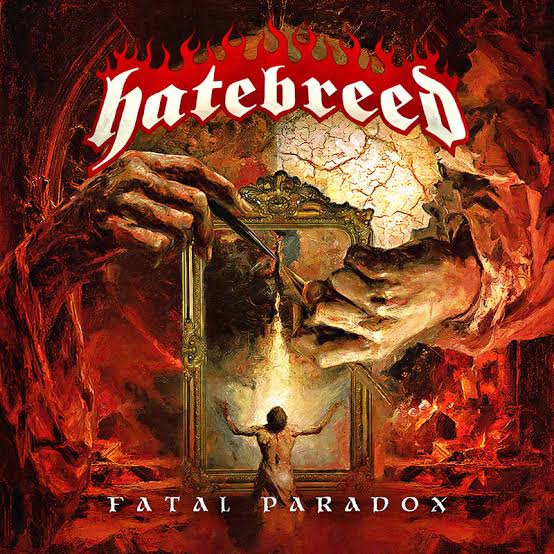
On July 21, the Connecticut hardcore veterans announced Fatal Paradox, their ninth full-length album and first since 2020's Weight of the False Self. Produced by longtime collaborator Chris "Zeuss" Harris, the record arrives November 6 through BLKIIBLK Records. The announcement came with its opening track, "Kill Count Increase," a two-and-a-half-minute reminder that Hatebreed still understand the value of entering a room through the wall.
Jamey Jasta's description is even less decorative: "Fast. Hard. It gets down to business."
That is not exactly an unexpected creative direction from Hatebreed. Nobody has spent the past six years wondering whether the next record might be a wistful synth-pop detour. Still, Fatal Paradox arrives at an important point in the band's history, and the time between albums appears to have produced something more deliberate than another round of dependable breakdowns.
A familiar sound built under different circumstances
Before the album had a title, Jasta called it the band's "most ignorant, heavy, caveman-esque record yet." He also confirmed that Hatebreed made the record independently before deciding where it would eventually land, giving the band full creative control for the first time.
"There's no melody, so we won't even bother with that," Jasta joked in the same interview.
It is a funny line because it is blunt enough to sound like an anti-marketing campaign. It is also a useful description of what Hatebreed appear to be chasing. Rather than trying to modernize the band by grafting on whatever production trick is circulating this month, they went back toward the qualities that made Hatebreed immediately recognizable in the first place: speed, groove, confrontation, and the kind of breakdown that causes nearby furniture to reconsider its structural integrity.
Drummer Matt Byrne previously described the material as "way more metal, thrashy, fast, Slayer-esque," while still retaining the hardcore-punk foundation beneath it. He also called 2026 a "new era of the band," following lineup changes, health complications, and a stretch that required Hatebreed to keep moving through more than the usual album-cycle machinery.
That makes Fatal Paradox important for reasons beyond the six-year gap. Hatebreed are not merely returning after a long pause. They are testing whether a band this deeply associated with one particular form of impact can rebuild the machinery without losing the sound of it hitting the floor.
Three decades of making aggression useful
Hatebreed's history is full of music that sounds violent while functioning as encouragement.
Their 1997 debut, Satisfaction Is the Death of Desire, helped establish the metallic, mosh-ready hardcore language that would spread across the following decade. The Recording Academy later credited the record with helping blur the divide between hardcore punk and metal, packing 14 songs into just over 26 minutes. There is very little wasted motion on it, unless someone in the pit counts being launched horizontally as wasted motion.
Perseverance followed in 2002 and expanded that formula into something larger and more anthemic. "I Will Be Heard" became the band's defining rallying cry, translating hardcore confrontation into a message that listeners could carry into gyms, jobs, breakups, recoveries, and any other situation requiring someone to yell motivational instructions directly into the bloodstream. Hatebreed themselves have described the album as emblematic of its era.
A year later, The Rise of Brutality produced "Live for This," which earned Hatebreed a Grammy nomination for Best Metal Performance. The nomination mattered less as a seal of respectability than as evidence of how far the band's sound had traveled. What began in the Connecticut hardcore scene had become legible to mainstream metal audiences without being cleaned up for presentation.
By the time Weight of the False Self arrived in November 2020, Hatebreed's central language was fully established: pressure, endurance, personal responsibility, and the refusal to collapse beneath whatever has attached itself to your back. The album became their eighth full-length and the beginning of the longest gap between studio albums in the band's career.
Fatal Paradox does not need to erase any of that history. It needs to find a reason for the same vocabulary to matter now.
The album is arriving in motion
Hatebreed are not introducing the record from the safety of an inactive year.
The band are headlining both legs of the 2026 Summer Slaughter tour. The July run features Devourment, Incantation, Snuffed on Sight, The Last Ten Seconds of Life, and Face Yourself. The second leg, running through August and September, brings Terror, Incantation, Gates to Hell, Torture, and Creeping Death into the rotation.
That touring schedule gives "Kill Count Increase" somewhere useful to live immediately. Hatebreed songs have never been fully explained by headphones alone. They are constructed around physical response, gang vocals, bodies moving toward the stage, and the social contract that everyone will try to destroy the room without permanently destroying each other.
The release date also lands directly against another stretch of touring. On November 6, the same day Fatal Paradox arrives, Hatebreed are scheduled to begin the East Coast Assault on Europe Tour with Life of Agony. The run continues through cities including Warsaw, Prague, Berlin, Hamburg, and Budapest before concluding later that month.
There is something fitting about releasing a Hatebreed album and immediately taking it into rooms where the songs can be stress-tested against an actual crowd. A streaming total can tell you that someone pressed play. A pile of people shouting the same line back at the stage tells you whether the thing works.
An Obituary guest spot and a COC cover
The full Fatal Paradox tracklist contains a few details that say more about the album than another stack of adjectives could.
Obituary vocalist John Tardy appears on "Sacrifice Season," pairing one of death metal's most recognizable voices with Jasta's command-center bark. The album also closes with Hatebreed's version of Corrosion of Conformity's "Poison Planet," connecting the record to the American hardcore and crossover lineage that helped make Hatebreed possible.
"Make the Demons Obey," released in 2025 as the band's first new song in nearly five years, also appears on the record. Guitarist Frank Novinec later explained that releasing songs individually gave the band time to continue reviewing and adjusting the album instead of locking every decision the moment the first single appeared.
Those choices suggest that Fatal Paradox is not a reinvention disguised as a press release. It is Hatebreed looking backward long enough to identify the strongest parts, then forcing them through the current version of the band.
The paradox has always been the point
There is an obvious contradiction at the center of Hatebreed.
The music is hostile, but the message is often restorative. The riffs sound built for demolition, while the lyrics insist on survival. For more than 30 years, Hatebreed have made songs that appear ready to fight the listener before telling that same listener to stand up, take responsibility, and keep going.
That may be the real Fatal Paradox.
The band does not need to soften its sound to prove it has matured. It does not need to abandon the breakdown, discover atmospheric interludes, or suddenly reveal a hidden flute player. After six years, the more interesting challenge is whether Hatebreed can return to the same well and pull up something that still tastes dangerous.
"Kill Count Increase" suggests they brought a larger bucket.
Fatal Paradox arrives November 6 through BLKIIBLK Records. The album is available to preorder through Hatebreed's official website, and "Kill Count Increase" is streaming now.