
Zoltan Bathory has occasionally stood onstage in front of 50,000 people and wondered how making noise became a paying job. After 20 years of Five Finger Death Punch, the disbelief has not entirely left him. The crowds grew, the tours became larger and the band accumulated billions of streams, but Bathory told MusicRadar that he can still look out at an arena and think, “What is this?”
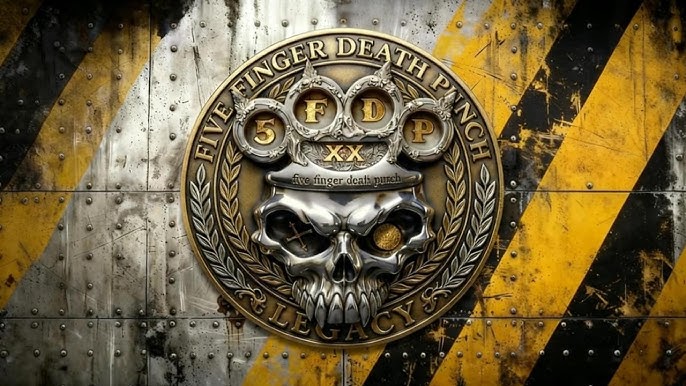
The band has answered the question by naming its tenth album Legacy. It arrived digitally July 31 during Five Finger Death Punch’s twentieth-anniversary year, with CD, vinyl and cassette editions following September 18. Calling a record Legacy while the career is still active displays the restrained humility of carving your own face into a mountain, but Five Finger Death Punch have never built much around restraint.
For two decades, the band has occupied an unusually durable place in heavy music. Five Finger Death Punch are commercially enormous and deeply important to a large audience, while remaining one of metal’s favorite groups to insult. Their name alone can turn a comment section into a zoning dispute. Fans hear direct songs about anger, addiction, betrayal, survival and recovery. Critics hear blunt lyrics, polished production and riffs engineered for rooms with multiple concession stands.
Neither group appears close to exhausting the subject.
Five Finger Death Punch have never asked listeners to excavate meaning from beneath seven layers of metaphor. The choruses announce themselves early, the riffs arrive with shoulders attached and emotional conflict is rarely allowed to hide behind tasteful ambiguity. When someone has caused a problem in a Five Finger Death Punch song, that person is unlikely to escape without being identified, addressed and possibly assigned a song title.
The same directness that made the band accessible has also made it easy to parody. Their visual language has often operated near the intersection of military hardware, skulls and the most committed section of a truck-stop T-shirt wall. Some of the criticism is earned. The writing can become repetitive, the imagery can become excessive and the band’s sincerity sometimes arrives at a volume that causes nearby objects to shift.
Twenty years is a long time for a temporary embarrassment.
Bathory described Legacy as a snapshot of where Five Finger Death Punch has been, where it stands and where it intends to go. The band spent two to three years developing the album, choosing its ten tracks from nearly 30 songs and working with producer Drew Fulk for the first time after a long run with Kevin Churko. Bathory pointed to “Nails in the Coffin,” “Eye of the Storm” and “De Oppresso Liber” as representative tracks, saying the album was meant to show a new listener exactly what Five Finger Death Punch is.
That goal creates a narrow path. A veteran band trying to capture its signature sound can easily produce a museum exhibit with louder drums. Five Finger Death Punch are not suddenly abandoning arena metal for pastoral folk songs, and nobody seems to have wandered into the sessions carrying a flute. Legacy has to make familiarity feel deliberate rather than automatic.
Bathory’s definition of legacy has less to do with critical approval than with endurance. “You can be famous for saying something crazy on the internet,” he told People, but lasting work takes time and continues to exist after its creators are gone. It is a convenient argument for a band that has spent much of its career being told its popularity should not count, but convenience does not make it false.
The more persuasive evidence appears in the stories attached to individual songs. Bathory has repeatedly recalled meeting a teenage fan who gave the band the red pen he had used to write a suicide note. A friend sent him the video for “Coming Down” that day, and he decided to keep living. Years later, he returned to another meet-and-greet as an adult with a college education and children. Ivan Moody went backstage and brought out the pen, which he had kept.
The story does not make every Five Finger Death Punch song good, nor should it be used to swat away criticism whenever someone objects to a lyric. It reveals the distance between reviewing music and living with it. A critic can hear repetition, heavy-handed writing or an overproduced chorus; a listener may hear the thing that carried them through a night they were not certain they would survive.
Five Finger Death Punch have built much of their audience in that distance. Their songs allow pain to arrive without dressing it in elegant language first. Anger remains ugly. Recovery sounds exhausting. Survival is presented less as a graceful ascent than as dragging yourself across the floor while swearing at it. The emotional vocabulary is limited, but it is recognizable.
The band’s history has not been remotely orderly. Bathory described its earlier years as a tornado filled with flying cows, cars and debris, and recalled Nikki Sixx advising them to slow down after witnessing their behavior on tour. Being warned about excess by a member of Mötley Crüe is the rock equivalent of receiving a concerned note from the fire department while already on fire.
Five Finger Death Punch survived the chaos by learning how to work around difference rather than eliminate it. Bathory has compared the current lineup to a SWAT team whose members each have a specialized role, an analogy so thoroughly Five Finger Death Punch that it could have appeared on the album packaging. The group now consists of Bathory, Ivan Moody, Andy James, Chris Kael and Charlie Engen, the lineup responsible for both AfterLife and Legacy.
The anniversary continues on the road through October before the tour resumes in the United Kingdom and Europe in January. These songs have always made their strongest argument at scale, where a blunt chorus becomes thousands of people shouting the same words and the polished production stops sounding oversized because the room has finally grown around it.
Calling the album Legacy will not end the debate around Five Finger Death Punch. Fans do not need critics to issue a retroactive permit, and critics are under no obligation to admire two decades of material they never enjoyed. The band has already achieved the outcome most irritating to anyone who expected it to vanish: Five Finger Death Punch stayed long enough for the argument itself to become part of the legacy.
Stream: Legacy Tour dates: Five Finger Death Punch’s official tour page
SEO title: Five Finger Death Punch Release Legacy After 20 Years
Meta description: Five Finger Death Punch mark 20 years with Legacy, an album shaped by longevity, fan loyalty and two decades of metal refusing to stop arguing.
Suggested slug: five-finger-death-punch-legacy-album